⚠️ The Silent Guardian of HVAC Systems: Importance of Pressure Transmitters and Proper Maintenance
Modern HVAC systems depend heavily on sensors and automation to maintain efficiency, safety, and reliability. Among these critical devices, the pressure transmitter plays a major role in monitoring system performance and protecting expensive equipment.
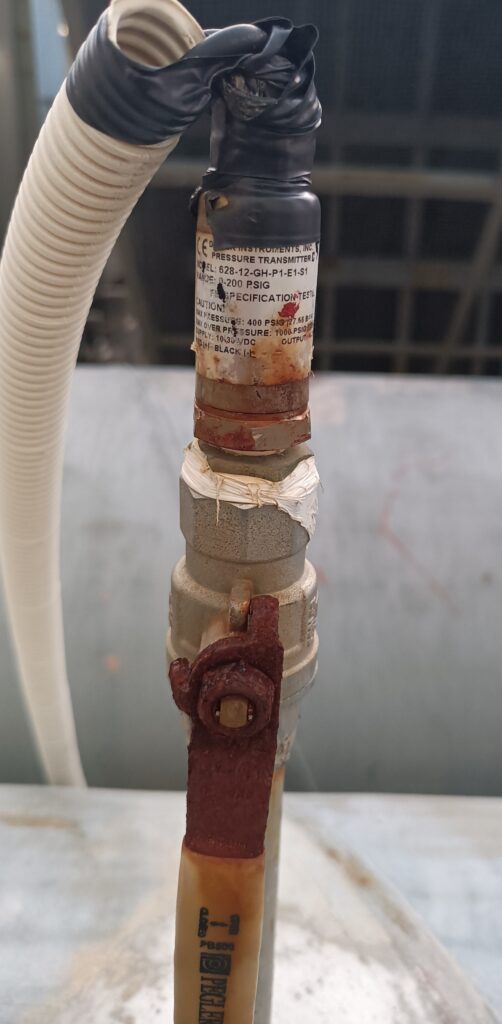
A recent field observation of a pressure transmitter installed on an HVAC piping system highlighted serious maintenance concerns such as corrosion and possible contamination. These conditions emphasize why regular inspection of instrumentation is just as important as maintaining mechanical components.
🔍 What is a Pressure Transmitter in HVAC Systems?
A pressure transmitter is an electronic device that measures pressure inside pipes and converts it into a signal (usually 4–20 mA or digital output). This signal is sent to:
Building Management Systems (BMS)
HVAC control panels
Monitoring and alarm systems
Pressure transmitters are commonly used to monitor:
✔ Chilled water pressure
✔ Hot water pressure
✔ Refrigerant pressure
✔ Pump discharge and suction pressure
✔ Air handling unit (AHU) coil pressure
⚙️ Why Pressure Monitoring is Critical
Pressure is one of the main indicators of HVAC system health.
Proper monitoring helps to:-
Maintain correct water flow through chillers and coils
Detect pump failures or blockages
Prevent pipe bursts or leaks
Ensure efficient heat transfer
Optimize energy consumption
Without accurate pressure data, HVAC systems may operate inefficiently or even fail unexpectedly.
⚠️ Issues Observed in the Installed Pressure Transmitter
The pressure transmitter shown indicates several warning signs that maintenance teams should never ignore.
- External Corrosion
Visible rust formation around the transmitter and fittings indicates exposure to moisture or condensation. This can lead to:
Sensor damage
Signal inaccuracies
Mechanical failure
Leakage at connection points - Poor Insulation or Protection
Damaged or improper insulation around HVAC piping can cause condensation buildup. Over time, moisture exposure accelerates corrosion and reduces transmitter lifespan. - Risk of Measurement Errors
Corroded impulse connections or blockages can cause:
Incorrect pressure readings
False alarms in BMS systems
Poor system control performance
In HVAC automation, incorrect data can lead to energy wastage and system instability.
💡 Consequences of Neglecting Pressure Transmitter Maintenance
Ignoring instrumentation maintenance can result in:
✔ Pump damage due to improper pressure control
✔ Reduced cooling or heating efficiency
✔ Increased energy consumption
✔ Unexpected HVAC system shutdowns
✔ Higher repair and replacement costs
In commercial buildings, these failures can affect occupant comfort and operational continuity.
🛠 Recommended Maintenance Practices
To ensure reliability and accuracy, HVAC teams should follow proper preventive maintenance procedures.
✔ Routine Visual Inspection
Check transmitters for rust, condensation, loose fittings, and physical damage.
✔ Verify Calibration
Regular calibration ensures accurate pressure readings and proper system control.
✔ Protect Against Moisture
Ensure proper insulation of chilled water lines
Use weatherproof enclosures where required
Seal cable entries properly
✔ Check Impulse Lines and Valves
Blocked or air-filled impulse lines can cause inaccurate measurements.
✔ Replace Aging Sensors
Pressure transmitters have a limited service life. Timely replacement prevents unexpected failures.
🌱 Role in Energy Efficiency and Smart Building Operation
Pressure transmitters are key components in energy-efficient HVAC systems. Accurate pressure monitoring helps:
Maintain optimal pump operation
Reduce unnecessary energy usage
Support predictive maintenance strategies
Improve overall building sustainability
✅ Conclusion
Pressure transmitters may appear as small devices within HVAC systems, but their role is vital for safe and efficient operation. The observed corrosion and deterioration in field installations serve as a strong reminder that instrumentation maintenance should never be overlooked.
A well-maintained pressure monitoring system improves reliability, reduces energy costs, and extends the life of HVAC equipment.
About the Author